Boat Nails and Marine Nails: Types, Materials and Buying Guide
Boat nails are a specialist fastener family with one job: holding wooden hulls, decks, planking and joinery together in the most corrosive environment a wooden structure can face. Unlike ordinary construction nails, they are specified by material (copper, silicon bronze, stainless steel), shape (square, round, rooved) and clenching technique rather than by simple length and gauge. This guide explains the types, materials, sizes and buying details for boatbuilders, marine suppliers and importers.
If you supply marine fasteners as part of a wider range, our boat nail product page shows the range we manufacture, and the sections below explain how to specify it correctly.
Types of Boat Nails
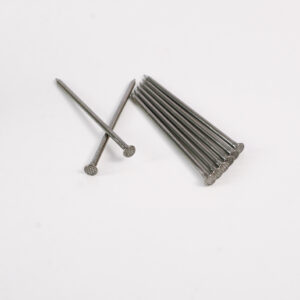
- Clinker (rooved) boat nails: square-section nails with a softer material such as copper or bronze, designed to be clenched (rooved) over a washer on the inside of the hull. They are the traditional fastener for clinker-built boats, where each plank overlaps the next and the nail passes through both layers.
- Square boat nails: square or rectangular shank nails that grip the wood on four faces. They resist rotation better than round nails and are used in planking, stem joints and heavy timber work.
- Round shank marine nails: general-purpose round nails in corrosion-resistant materials, used for interior joinery, decking and fittings where clenching is not required.
- Annular ring marine nails: ring shank nails in stainless or bronze for maximum withdrawal resistance in planking and repair work.
The distinction between “boat nails” and “marine nails” is mostly one of tradition: boat nails usually means the square, clenched fasteners of wooden boat building, while marine nails covers the broader range of corrosion-resistant nails used anywhere near salt water.
Materials for Marine Environments
The material is the most important decision in a marine nail order. Ordinary steel nails, even galvanized, fail quickly in salt water:
| Material | Corrosion resistance | Typical use | Relative price |
|---|---|---|---|
| Silicon bronze | Excellent in salt water | Traditional clinker and planking fasteners | Highest |
| Copper | Excellent in salt water | Traditional hull fastenings, roved nails | High |
| Stainless 316 (A4) | Excellent, near-permanent | Modern boats, decking, fittings, repairs | High |
| Stainless 304 (A2) | Very good | Fresh-water boats, interior marine joinery | Medium-high |
| Hot-dip galvanized | Limited in salt water | Fresh-water docks, temporary marine work | Low-medium |
A practical rule for distributors: stock silicon bronze and copper for traditional boatbuilding and restoration, and 316 stainless for modern construction and repair. Avoid recommending galvanized steel for permanent salt-water exposure.
Common Boat Nail Sizes
Boat nail sizes follow the planking thickness and the tradition of the boatbuilder. The sizes below cover most demand:
- 25mm (1″) to 38mm (1-1/2″): light joinery, deck fittings and thin planking.
- 40mm (1-5/8″) to 50mm (2″): standard hull planking and clinker overlaps on small craft.
- 63mm (2-1/2″) to 75mm (3″): heavy planking, stem joints and large craft.
- 90mm (3-1/2″) and longer: keel and heavy structural fastening.
Square boat nails are typically specified by side dimension (e.g. 4mm x 4mm or 5mm x 5mm) as well as length, because the square section determines the grip in the wood. Always confirm the shape – square, round or rooved – because it changes the clenching behaviour.
How Clinker (Rooved) Boat Nails Work
In clinker construction, the nail is driven through the overlapping planks from the outside. A rove – a small washer with a hole – is placed over the point on the inside, and the protruding end is upset with a hammer and punch to form a clenched head. The result is a permanent, watertight fastening that cannot work loose. This is why copper and bronze are used: they are soft enough to clench without cracking, and they do not corrode in contact with oak and other acidic boatbuilding timbers.
When ordering rooved nails, specify the length so that the point protrudes enough to clench (usually a few millimetres beyond the rove), and confirm the rove size and material. Supplying the nail without the matching rove is a common sourcing gap.
How to Specify Boat Nails for an Order
A complete boat nail specification includes: For dimension checks, fastener sizes in North America follow ASTM F1667, and European timber connections reference EN 14592; naming the standard on the RFQ removes guesswork about square sizes and lengths.
- Material – copper, silicon bronze, stainless 304 or 316, with the alloy clearly stated.
- Shape – square, round, rooved or ring shank.
- Length and section – e.g. 50mm x 4mm square, or 63mm round 10 gauge.
- Head style – flat countersunk, oval or clout head.
- Point type – diamond or blunt, depending on the timber and clenching method.
- Roves – whether washers are included, and their size and material.
Put these six fields on the RFQ and the factory can quote accurately the first time. For the full field list used across our sourcing guides, see the RFQ checklist.
Boat Nails vs Marine Nails: What Is the Difference?
In practice the terms overlap. Boat nails is the traditional name for the square, clenched fasteners of wooden boat construction, usually in copper or bronze. Marine nails is the wider category covering any corrosion-resistant nail used on boats, docks and coastal structures – including stainless ring shank nails, clout nails and decking nails. If you are sourcing for a boatbuilder, ask which tradition they work in: a clinker builder needs square copper nails and roves, while a modern builder may need 316 stainless ring shank nails.
Quality Checks for Boat Nails
- Alloy verification: request the material certificate; bronze and stainless grades are visually similar but behave very differently in salt water.
- Softness for clenching: copper and bronze nails must clench without cracking; test a sample by upsetting the point over a rove.
- Square section consistency: for square nails, measure the section at several points – tapered sections reduce grip.
- Surface condition: no deep scratches, cracks or pits that would create corrosion or failure points.
- Length tolerance: for roved fastenings, consistent length is required so every nail protrudes the same amount for clenching.
Boat Nail FAQs
What are boat nails made of? Traditionally copper and silicon bronze; modern builders also use 316 stainless steel. All three resist salt-water corrosion.
Can galvanized nails be used on a boat? Not for permanent salt-water exposure – galvanized steel corrodes in salt water and is limited to fresh-water or temporary applications.
What is a rove in boatbuilding? A small washer used with copper clinker nails; the nail point is clenched over the rove to form a permanent fastening.
Are stainless steel boat nails better than bronze? Both are excellent. Bronze is traditional and clenches well; 316 stainless is stronger and often cheaper for modern builds. The choice is usually based on the building method and aesthetics.
Do you supply roves with boat nails? Yes – roves should be ordered with the nails; specify the size and material so they match the shank section.
Where to Source Boat and Marine Nails
Kin Metal manufactures square boat nails, round marine nails and stainless ring shank fasteners in copper, bronze and 316 stainless, in the sizes used by boatbuilders and marine suppliers, with export packing and material certification. View our boat nail product page or send your specification for a quotation.