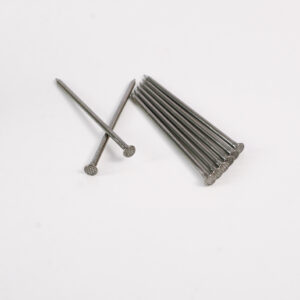
Comparing electro galvanized vs hot dip galvanized clout nails starts with the service environment, not the appearance of the nail. Both finishes use zinc to protect steel, but their coating processes and typical coating thicknesses differ. For importers, roofing merchants and building-material distributors, ordering only “galvanized felt nails” leaves an important part of the specification undefined.
This guide explains the difference, the questions to ask before buying, and the inspection details that help keep repeat orders consistent. It covers loose, wide-head clout nails for roofing felt and compatible sheet materials; the roofing system must still approve the nail size, material and fixing method.
Electro Galvanized vs Hot Dip Galvanized Clout Nails: Key Differences
| Buying factor | Electro galvanized | Hot dip galvanized |
|---|---|---|
| Process | Zinc is deposited using an electrical plating process | Cleaned steel is immersed in molten zinc |
| Typical coating | Relatively thin zinc layer | Generally thicker coating with zinc-iron alloy layers |
| Selection priority | Confirm that the specified protection is sufficient for the intended exposure | Consider where greater corrosion protection is required; verify the actual coating specification |
| Quotation check | Specify coating thickness and any required supplementary treatment | Specify coating requirements and acceptance criteria for the finished nail |
| What the name does not prove | Outdoor suitability, test performance or service life | Suitability for every coastal, chemical or roofing environment |
The American Galvanizers Association’s guide to zinc-coated nails distinguishes electroplating from hot-dip galvanizing and other zinc-coating methods. Its guidance highlights the thin coating typically found on electroplated nails and the more substantial protection offered by hot-dip galvanized nails. A coating name alone is not a batch test result or a project warranty.
Which Finish Should a Roofing Buyer Choose?
Protected or low-exposure applications
Where the specification permits electro galvanized clout nails, check that the proposed coating meets the requirement. Do not assume that a nail is protected simply because a roof covering will conceal it. Condensation, damp storage and moisture entering the roof assembly can still affect the fixing.
Exposed or regularly damp applications
Hot dip galvanized clout nails are a more appropriate candidate to evaluate where the required corrosion protection exceeds that of a thin electroplated coating. For example, Simpson Strong-Tie’s PAPP range identifies a hot-dip galvanized clout nail for applications including roofing felt to timber. That manufacturer’s product information is an example, not evidence that another supplier’s nail has the same performance or approvals.
Coastal sites, treated timber and demanding environments
Ask the roof-system supplier or responsible designer to confirm the fastener material and coating. Salt exposure, timber treatment and contact with other materials can change the selection. Some specifications may require stainless steel or another approved fixing rather than either galvanized option. Avoid choosing the finish solely from the destination country’s name: inland dry storage and a salt-exposed coastal roof are different conditions.
Do Not Judge the Coating by Shine Alone
Appearance is useful for identifying obvious defects, but it does not measure corrosion protection. The AGA explanation of hot-dip galvanized coating layers notes that dull or varied gray appearance can occur without indicating inferior protection. Ask for the agreed inspection results instead of accepting “bright means better” as a quality rule.
For clout nails, inspect the head, underside of the head, shank and point. Agree how the supplier will assess bare areas, damaged coating, excessive deposits and nail-to-nail sticking. A sample should also be checked for straightness, head formation and practical driving into the intended substrate.
Compare Costs Using the Same Nail Specification
A useful quotation comparison holds the base nail dimensions constant. A lower price per kilogram may reflect a smaller head, a different shank diameter, different packaging or a different coating requirement rather than a more efficient supplier.
Request separate prices for the two finishes against one agreed drawing. Confirm the currency, trade term, quantity per size, net weight, inner packing, outer cartons and any inspection or documentation charges. Do not assume a fixed percentage price premium for hot-dip galvanizing: obtain current quotations for the actual order.
Our nail quotation comparison checklist can help organize those details before placing a bulk order.
Five Checks Before Approving Bulk Clout Nails
- Dimensions: confirm length, shank diameter, head diameter, head pattern and tolerances. Do not approve the coating while leaving the nail geometry undefined.
- Coating identification: state electro galvanized or hot dip galvanized explicitly on the purchase order and agreed packaging artwork.
- Inspection method: agree the coating requirement, measurement method, sampling plan and acceptance criteria before production.
- Supporting documents: request records that identify the supplied product or batch. A general catalogue certificate does not necessarily apply to the ordered nail.
- Pack consistency: verify labels, net weight, size separation and protection against moisture during storage and transport.
If the buyer requires a corrosion test, specify the method and acceptance criteria with the supplier. Do not convert a laboratory test duration directly into a promise of outdoor service life. Similarly, a sample driving check is useful for fit and handling but is not a substitute for the required coating inspection.
Export Packing and Warehouse Handling
Keep EG and HDG product codes clearly separated, even when the nails share the same dimensions. Specify the size and finish on the inner pack as well as the outer carton so a distributor does not have to identify the coating by eye after unpacking.
Agree dry packing and suitable moisture protection for the shipment route. Inspect wet or damaged cartons on arrival and isolate suspect goods for assessment rather than mixing them into saleable stock. The protective finish is not a replacement for appropriate packing and storage.
Clout Nail Options from KIN METAL
The published KIN METAL clout nail range includes Q195 carbon steel, smooth shanks, circular flat or grid-pattern heads, lengths of 16–50mm and diameters of 2.5–3.4mm. Electro galvanized and hot dip galvanized finishes are listed, together with other finish options.
Send the required dimensions, finish, coating criteria, quantity per size, destination and packing format for confirmation. Exact availability, documentation and quotation terms should be agreed for each order; this article does not claim a particular coating thickness, certification or tested lifespan for all KIN METAL nails.
Request a clout nail quotation and ask for comparable EG and HDG options against the same specification.
Frequently Asked Questions
Are electro galvanized and hot dip galvanized clout nails the same?
No. They use different zinc-coating processes and typically have different coating thicknesses. Write the required process into the order rather than using “galvanized” alone.
Will hot dip galvanized clout nails never rust?
No coating makes that universal promise. Performance depends on the actual coating, environment, handling damage and application. Obtain project-specific advice for demanding exposure.
Can I replace specified HDG nails with EG nails to reduce cost?
Not without approval from the party responsible for the specification. A similar-looking nail is not necessarily an equivalent fastener.
Does a thicker coating replace the need for a wide head?
No. Coating selection addresses corrosion protection; head size and nail geometry address a different part of the fixing requirement. Both must match the roofing system.
Prepared by the KIN METAL Editorial Team. This purchasing guide does not replace roof-system instructions, project specifications or professional assessment of fastener suitability.