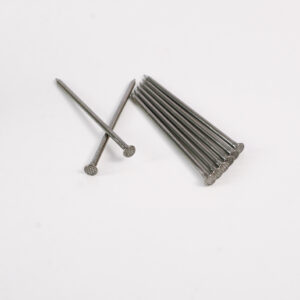
This roofing nails import guide explains how to specify umbrella head roofing nails for corrugated sheets before asking for a price. The roofing sheet, supporting timber, exposure conditions, fixing pattern and local installation requirements all affect the correct specification.
For importers and construction suppliers, incomplete specifications can also create commercial problems. Two quotations may appear to describe the same roofing nail while differing in shank diameter, head profile, zinc finish, washer configuration or package weight. These differences affect application suitability, landed cost and how easily the product can be resold.
This guide explains the information buyers should confirm before requesting samples or placing a bulk order.
What Are Umbrella Head Roofing Nails?
Umbrella head roofing nails are carbon-steel fasteners with a broad, raised head. The larger head spreads pressure over a wider area than a conventional small flat head. This makes the design suitable for selected corrugated roofing sheets and other sheet materials fixed to an appropriate supporting structure.
Depending on the market and application, buyers may also use terms such as:
- galvanized roofing nails;
- corrugated sheet nails;
- umbrella roofing nails;
- twisted-shank roofing nails; or
- roofing nails with washers.
These descriptions are not always interchangeable. A complete purchase specification should state the head type, length, shank diameter, shank pattern, finish, washer requirement and packing—not only the general product name.
Start With the Roofing System, Not the Nail Catalogue
Before selecting a nail, identify the material that will be fixed and the structure beneath it. Corrugated metal, bituminous sheets, fibre-cement sheets and plastic roofing products can have different fixing requirements. The support may also be timber, steel or a complete deck.
The roofing-sheet manufacturer’s installation instructions and the applicable project requirements should take priority. For example, Onduline publishes product-specific fixing patterns and states that the number and location of fixings vary with the roofing system and roof pitch. This is why a generic “one nail fits every corrugated sheet” recommendation is unreliable.
Send the following information to the nail supplier:
- roofing-sheet material and profile;
- sheet thickness;
- supporting structure and timber thickness, if applicable;
- required penetration into the support;
- indoor, outdoor, coastal or high-humidity exposure;
- project or local standard; and
- fixing manufacturer or roofing-system requirements.
If the roofing manufacturer specifies proprietary nails or screws, follow that requirement. A general-purpose roofing nail should not be substituted without technical approval.
How to Specify Roofing Nail Length and Diameter
The nail must pass through the roofing material and achieve the penetration required by the roof-system specification. Therefore, the visible sheet thickness alone is not enough to determine nail length.
KIN METAL’s current umbrella-head roofing nail range includes lengths from 38 to 100 mm and shank diameters from 2.1 to 4.5 mm. Availability within that range should still be confirmed for the selected shank, finish, head and packing combination.
When comparing quotations, use a dimension schedule like this:
| Specification item | Information to state |
|---|---|
| Nail length | Millimetres and, when needed, inch equivalent |
| Shank diameter | Millimetres or the agreed wire gauge |
| Head type | Semicircular umbrella head |
| Head profile | Hemispherical or protruding, with drawing if critical |
| Shank | Smooth or twisted |
| Point | Required point geometry |
| Finish | Polished, electro-galvanized, hot-dip galvanized or sprayed |
| Washer | None, metal washer or specified sealing washer |
| Packing | Pieces or net weight per inner pack and export carton |
Do not rely on a size description such as “2-inch roofing nail” alone. The same nominal length can be supplied with different diameters and head profiles.
Smooth Shank or Twisted Shank?
KIN METAL supplies smooth- and twisted-shank roofing nails. The right option depends on the substrate, application and project specification.
Smooth-shank roofing nails
Smooth shanks are straightforward to drive and are commonly selected for standard fastening work. They may also be easier to manufacture and source in common export specifications. However, suitability still depends on the roofing assembly and required resistance to withdrawal.
Twisted-shank roofing nails
A twisted shank can increase mechanical engagement with suitable timber compared with a smooth shank of otherwise comparable dimensions. Buyers often consider this option where additional holding resistance is required. It should not be described as universally superior, because performance depends on the timber, nail dimensions, installation method and complete roof design.
For a meaningful comparison, request samples with the same length, diameter, head and finish, changing only the shank pattern.
Choosing the Surface Finish
The surface finish should match the expected exposure and the roofing-system requirement.
Polished
Polished roofing nails have no zinc coating and are mainly considered for dry or protected conditions. They should not be assumed suitable for exposed roofing simply because the head shape is described as a roofing-nail profile.
Electro-galvanized
Electro-galvanizing gives the nail a zinc coating and a relatively smooth appearance. It may suit lower-exposure applications where the project permits this finish. The coating requirement should be stated rather than accepted as an unspecified “galvanized” finish.
Hot-dip galvanized
Hot-dip galvanizing is often considered for more demanding outdoor or humid exposure. Buyers should define the required coating standard or measurable coating requirement when it is important to the project. The phrase “hot-dip galvanized” by itself does not replace an agreed inspection criterion.
Sprayed or coloured finish
Some markets request sprayed finishes for identification or appearance. Confirm the colour, coating system, adhesion expectation and whether the finish is decorative or part of the corrosion-protection requirement.
Always check material compatibility. The roofing-sheet manufacturer or project engineer should approve the fastener material and coating for the roofing material and environment.
Do You Need a Washer?
A washer can increase the bearing area and, in certain roof systems, form part of the sealing arrangement. But not every washer creates a waterproof joint, and not every umbrella head is a substitute for a specified sealing washer.
Before ordering roofing nails with washers, confirm:
- washer material;
- outside and inside diameter;
- thickness;
- colour, if relevant;
- whether the washer is supplied loose or assembled; and
- the roofing-system manufacturer’s sealing requirement.
Request a drawing or approved sample when washer dimensions are important. The supplier should not guess the sealing performance of an unspecified washer.
Quality Checks for a Bulk Order
A useful inspection plan focuses on measurable requirements. For umbrella head roofing nails for corrugated sheets, common checks include:
- nail length and shank diameter;
- head diameter, shape and consistency;
- shank pattern and twist uniformity;
- nail straightness;
- point formation;
- coating appearance and the agreed coating test;
- washer dimensions and assembly, when supplied;
- quantity or net weight per package;
- carton strength, markings and pallet condition; and
- comparison with the approved pre-production sample.
Agree on the measurement method, sampling level and acceptance criteria before production. A statement such as “standard export quality” is too vague to resolve a disagreement.
Packing Requirements for Importers and Wholesalers
Packing affects both transport protection and the buyer’s sales channel. KIN METAL can discuss cartons, small boxes, poly bags, woven bags and gunny bags for different roofing-nail orders.
An RFQ should specify:
- pieces or net weight per inner package;
- number of inner packages per carton;
- gross and net carton weight;
- carton dimensions and strength;
- label language and barcode requirements;
- private-label artwork;
- pallet requirement; and
- maximum acceptable pallet weight or height.
For retail distribution, a smaller labelled pack may matter more than the lowest packaging cost. For project supply, larger weight-based packs may be practical. Compare quotations using the same packing basis so that unit prices remain comparable.
Roofing Nails Import Guide: RFQ Checklist
To receive a useful quotation, send one complete specification instead of requesting “your best price for roofing nails.” Include:
- product: umbrella head roofing nails;
- application: roofing-sheet type and supporting structure;
- length and shank diameter;
- umbrella-head profile and required dimensions;
- smooth or twisted shank;
- surface finish and coating requirement;
- washer specification, if required;
- packing and labelling;
- total quantity;
- destination port and requested trade term;
- required documents or inspection; and
- reference drawing, photo or sample.
This information helps a supplier quote the intended product and reduces revisions before sampling and production.
Request Umbrella Head Roofing Nails From KIN METAL
KIN METAL manufactures and exports carbon-steel umbrella head roofing nails for distributors, construction suppliers and project buyers. Current options include 38–100 mm lengths, 2.1–4.5 mm diameters, smooth or twisted shanks, and several surface finishes and packing formats.
Review the KIN METAL Roofing Nails product page for the available specification range. For a quotation, send the required dimensions, finish, packing, quantity and destination. A drawing, roofing-sheet reference or physical sample is recommended when the head or washer design must match an existing market specification.
Frequently Asked Questions
What is the best roofing nail for corrugated sheets?
There is no universal best option. The correct nail depends on the sheet material, support, required penetration, exposure and the roofing manufacturer’s instructions. Confirm the complete roof system before selecting the fastener.
Are umbrella head roofing nails waterproof?
An umbrella head provides a broad bearing surface, but the head alone should not automatically be described as waterproof. The roof system may require a particular washer, cap, sealing method or proprietary fixing.
Are twisted-shank roofing nails better than smooth-shank nails?
Twisted shanks can provide greater mechanical engagement in suitable timber. Smooth shanks may suit standard applications. The decision should follow the project requirement and, where needed, comparative testing in the intended substrate.
Which galvanized finish should buyers request?
Choose the finish according to the exposure and roofing-system specification. State whether electro-galvanized or hot-dip galvanized is required and add a measurable coating requirement when relevant.
What details are needed for an accurate quotation?
Provide the nail length, shank diameter, head profile, shank type, finish, washer requirement, packing, quantity and destination. Add a drawing, photo or approved sample for special specifications.
Written by the KIN METAL Editorial Team. Product specifications should be confirmed against the current quotation and the applicable roofing-system requirements before ordering or installation.