Roofing Felt Nails (Clout Nails): Sizes, Materials and Buying Guide
Roofing felt nails – also called felt nails, clout nails or 油毡钉 in Chinese trade terminology – are the short, large-headed nails used to fix roofing felt, underlayment, sarking and damp-proof membranes to timber. The wide head spreads the load so it cannot pull through the felt, and the short shank is long enough to bite into the timber without puncturing through to the inside of the roof. For distributors and builders, they are a small product with high volume, easy packing and steady reorder demand.
This guide covers the difference between felt nails, clout nails and roofing nails, the sizes and coatings buyers order, coverage rates, and the specification fields that prevent wrong shipments. If you are importing into the UK, our clout nails UK specification guide covers the British standard and terminology for that market.
What Are Roofing Felt Nails?
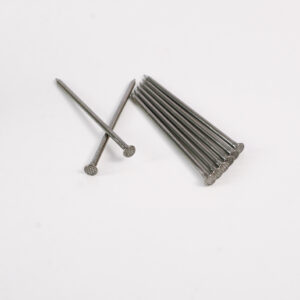
A roofing felt nail is a short nail with a large, flat head and a smooth or lightly ringed shank. Two features define it:
- Wide head: typically 6mm to 10mm across, much wider than a common nail of the same shank. The wide head stops the nail pulling through the felt or membrane under wind suction and thermal movement.
- Short shank: usually 20mm to 40mm long. Long enough to penetrate the felt and bite 15mm-20mm into the timber below, but short enough not to poke through thin roof boards.
The terms overlap in different markets: felt nails and roofing felt nails describe the product by its job, while clout nails is the traditional name for large-headed, short-shank nails used for felt, battens and light sheathing. In Chinese export trade, 油毡钉 covers the same product and is usually specified as clout nails or roofing felt nails in English.
Roofing Felt Nails vs Clout Nails vs Roofing Nails
| Feature | Roofing felt nails | Clout nails | Roofing nails |
|---|---|---|---|
| Head | Large, flat, thin | Large, flat, thin | Umbrella / semicircle head |
| Typical length | 20-40mm | 16-50mm | 38-100mm |
| Shank | Smooth or ringed | Smooth | Smooth or twisted |
| Main use | Felt, underlay, membrane | Felt, battens, sheathing | Shingles, shakes, roof boards |
| Corrosion protection | Galvanized standard | Galvanized common | Galvanized or stainless |
The short version: felt nails and clout nails are near-synonyms, while roofing nails are longer, have umbrella heads, and are designed to fix rigid roofing materials such as asphalt shingles. If a buyer asks for “clout nails vs roofing nails”, the deciding factors are the material being fixed (flexible felt vs rigid shingle) and the head shape required.
Common Sizes of Roofing Felt Nails
Roofing felt nails are ordered in millimetres in most export markets. These are the standard sizes:
| Length | Shank diameter | Head diameter | Typical use |
|---|---|---|---|
| 20mm | 2.5mm | 7-8mm | Light felt, membrane, repair work |
| 25mm | 2.5-2.8mm | 8mm | Standard single-layer felt on 12mm boards |
| 30mm | 2.8-3.1mm | 8-9mm | Felt on thicker boards, double-layer laps |
| 40mm | 3.1-3.4mm | 9-10mm | Heavy felt, sarking, battens on timber |
| 50mm | 3.4mm | 10mm | Heavy membranes and timber boarding |
US buyers may specify gauge instead of millimetres: 12 gauge is approximately 2.8mm and 11 gauge approximately 3.0mm shank diameter. Confirm the head diameter as well as the shank – two nails of the same length can have very different head sizes, and the head is what holds the felt.
Materials and Finishes
Roofing felt is exposed to weather, condensation and sometimes salt air, so the coating matters as much as the size: For UK roofing work, fixing practice follows BS 5534, the code of practice for slating and tiling; check shank and head requirements against it before quoting.
- Bright (uncoated): interior and temporary work only – felt on a dry, protected structure where rust is not a risk.
- Electro-galvanized: the most common and economical finish for general roofing felt. The thin zinc layer handles normal exterior exposure for years.
- Hot-dip galvanized (HDG): a thick zinc coating for coastal areas, agricultural buildings and humid climates where electro-galvanized nails would rust too soon.
- Zinc plated / sprayed: a lighter protective layer used where appearance and short-term protection are the main concerns.
- Stainless steel: for marine environments, premium roofing and any job where rust staining on the felt or roof is unacceptable.
For most export orders, electro-galvanized or hot-dip galvanized felt nails cover the demand. State the coating explicitly – “galvanized” alone does not tell the factory which process to use, and the corrosion life of the two is very different.
How Many Roofing Felt Nails Do You Need?
Coverage depends on the felt width, the number of laps and the fixing pattern, but these are the practical planning numbers used on site:
- Standard fixing pattern: one nail every 150-200mm along the top and bottom edges of each felt roll, plus along the side laps.
- Per roll estimate: a typical 10m x 1m felt roll fixed on 12mm boards with 25mm nails needs roughly 60-80 nails.
- Per square (100 sq ft) of roof: between 250 and 400 felt nails depending on lap spacing and wind exposure.
- Overlap lines: double the fixing density along laps in high-wind areas, and use a wider-headed nail so the lap does not tear out.
When quoting a project, add 10-15% for breakage, dropped nails and repairs. Distributors usually sell felt nails in 1kg boxes or 25kg export cartons; 1kg of 25mm galvanized felt nails contains roughly 800-900 pieces, which covers about 10-12 rolls of felt.
Applications for Roofing Felt Nails
- Roofing felt and underlayment: the primary application – fixing felt layers to roof boards before the final covering goes on.
- Sarking and sheathing: holding breather membranes and sarking boards in position on roofs and walls.
- Damp-proof courses (DPC): fixing DPC membrane to walls and door reveals where the wide head holds the membrane flat.
- Sheds and outbuildings: felt roofs on sheds, garages and animal housing, where the nails must hold the felt through wind and weather.
- Battens and light sheathing: clout nails fix timber battens and thin sheathing where a large head prevents pull-through.
Installation Tips
- Drive the nail through the felt at a slight angle towards the ridge or lap edge so the head seats flush without tearing the felt.
- Use a head diameter that matches the felt thickness – heavy felt needs a wider head to spread the wind load.
- In high-wind areas, fix along the laps at half the normal spacing, and consider a ringed-shank felt nail for extra withdrawal resistance.
- For metal or masonry surfaces, do not use felt nails – use the correct self-tapping screw or masonry fixing instead.
How to Specify and Buy Roofing Felt Nails
A complete roofing felt nail specification contains six fields: In Europe, dowel-type fasteners for timber structures are covered by EN 14592, a useful reference when agreeing dimensional tolerances with a factory.
- Length – e.g. 25mm, with tolerance.
- Shank diameter – e.g. 2.8mm or 12 gauge.
- Head diameter and shape – e.g. 8mm flat round head.
- Coating – bright, electro-galvanized, hot-dip or stainless, with coating weight where relevant.
- Shank type – smooth or ringed, if you need extra holding power.
- Packing – 1kg retail boxes, 25kg cartons, palletising and labelling.
Quality checks should cover head diameter consistency, coating adhesion (bend test), and shank straightness – bent shanks jam feeders and waste labour on site. For the full order and paperwork checklist, use our RFQ checklist and certificate guide.
Roofing Felt Nail FAQs
What size roofing felt nails should I use? 25mm (1″) is the standard for felt on 12mm roof boards; use 30mm-40mm for thicker boards, heavy felt or battens, and 20mm for light membrane repairs.
What is the difference between clout nails and roofing felt nails? In practice they are the same family – large-headed, short-shank nails for fixing flexible materials. “Roofing felt nails” describes the job; “clout nails” is the traditional product name.
How many clout nails are in a kilo? Approximately 800-900 pieces for 25mm galvanized felt nails, and roughly 500-600 for 40mm nails, depending on gauge.
Can I use roofing nails instead of felt nails? Only where the head shape suits the material. Umbrella-headed roofing nails are designed for rigid shingles; wide flat felt nail heads hold flexible felt and membrane without tearing.
Do felt nails rust? Bright nails will rust outdoors. Electro-galvanized handles normal exposure; hot-dip galvanized or stainless is the choice for coastal and high-moisture sites.
Are ringed-shank felt nails available? Yes – ringed-shank versions give higher withdrawal resistance for high-wind areas and are available in the same sizes and coatings as smooth-shank felt nails.
Where to Source Roofing Felt Nails in Bulk
Kin Metal manufactures clout and roofing felt nails in carbon steel with polished, electro-galvanized, hot-dip and sprayed finishes, in lengths from 16mm to 50mm and diameters from 2.5mm to 3.4mm, with 1kg retail boxes or 25kg export cartons. View our clout nail product page or send your specification for a quotation with packing and certification details.