Choosing common nails for wooden crates and export packaging is not simply a matter of ordering the lowest price per tonne. Nail length, wire diameter, head shape, shank design, surface finish and packing all affect assembly speed, wood splitting, joint reliability and the condition of the nails when they arrive at the buyer’s warehouse.
This guide is written for importers, hardware distributors, wooden packaging manufacturers and industrial buyers. It explains what to confirm before requesting a quotation and why the final nail specification must be matched to the crate design, timber and expected handling conditions.
Why Nail Selection Matters in Wooden Crates
A wooden crate can be exposed to lifting, vibration, repeated handling and changes in humidity during storage and transport. If a nail is too short, the joint may not achieve enough penetration. If it is too thick for the timber, it can split a board. A weak or badly formed head may pull through the wood, while inconsistent dimensions can slow production and cause rejected packages.
For this reason, buyers should treat the nail as part of the packaging design. The cargo weight, crate style, board thickness, wood species, joint position and fastening method all need to be considered. There is no single “standard crate nail size” that is correct for every wooden box.
Common Nails or Special Pallet Nails?
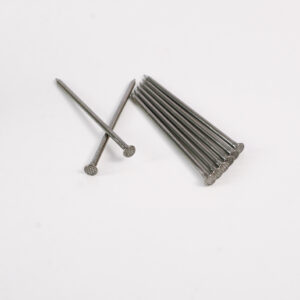
Loose common nails are widely used for general wooden boxes, crates, repair work and manually assembled packaging. They normally have a broad head, straight body and pointed end. Their simple design makes them practical for a wide range of export packaging applications.
High-speed pallet lines may instead require collated coil nails or another fastener designed for a specific nailing machine. Heavy-duty reusable pallets may also use ring-shank or screw-shank nails where higher withdrawal resistance is required. Do not assume that loose common nails will feed through automatic equipment. Confirm the tool or machine model, collation angle and fastener dimensions separately.
How to Select Nail Length and Diameter
The correct length depends on the combined timber thickness and the penetration required in the receiving member. The nail should pass through the first board and hold securely in the second without creating unnecessary protrusion. Diameter also matters: a larger diameter can improve bending resistance, but it can increase the risk of splitting thin, dry or dense timber.
Before choosing a size, provide the supplier with:
- the thickness of each timber member;
- the wood species or approximate density;
- the crate style and joint position;
- the cargo weight and expected handling method;
- whether the nail will be clinched;
- manual, pneumatic or automatic installation details; and
- the required standard, drawing or approved sample.
The U.S. Forest Products Laboratory notes that nail resistance is influenced by penetration depth, wood density, nail diameter, surface condition, point type, moisture and wood splitting. This is why a size copied from a different crate can be unreliable. The crate designer or responsible engineer should approve the final fastening schedule.
Smooth, Twisted or Grooved Shank
Smooth Shank Common Nails
Smooth shanks are easy to drive and economical for general-purpose wooden packaging. They are often suitable for one-way crates, boxes and other applications where the approved design does not call for enhanced withdrawal resistance.
Twisted or Grooved Shanks
A twisted or grooved shank creates additional mechanical engagement with the wood. It may be considered when vibration, repeated handling or withdrawal forces are important. The benefit depends on the actual shank profile, timber and installation method, so samples should be tested in the buyer’s production conditions before a bulk order.
Bright, Electro-Galvanized or Hot-Dip Galvanized?
| Finish | Typical use consideration | Buyer should confirm |
|---|---|---|
| Bright or polished | Dry indoor assembly and cost-sensitive packaging | Storage humidity, transit time and rust-prevention packing |
| Electro-galvanized | Cleaner zinc finish with moderate corrosion protection | Required coating specification and exposure conditions |
| Hot-dip galvanized | Outdoor, humid or more demanding exposure | Coating requirement, appearance, tolerance and test method |
Sea freight does not automatically mean every crate requires hot-dip galvanized nails. The correct finish depends on whether the fastener is exposed, how long the crate will be stored, the destination climate and the buyer’s performance requirement. For bright nails shipped in bulk, dry packing, suitable liners and moisture control can help reduce the risk of surface rust during transport.
Important Quality Checks Before Shipment
A clear inspection plan is more useful than a general request for “good quality.” For common nails used in wooden crates, buyers should define acceptable tolerances and inspect:
- overall length and shank diameter;
- head diameter, head shape and head-to-shank alignment;
- straightness and resistance to bending during trial driving;
- point shape and penetration performance in the actual timber;
- shank profile and surface condition;
- finish consistency and visible rust;
- net package weight or verified piece count; and
- carton strength, labels, batch separation and pallet condition.
A pre-production sample is especially useful when the buyer uses a local gauge name, a special head, private-label packaging or a non-standard dimension. Keep an approved sample and signed specification sheet for comparison with future orders.
Export Packing for Bulk Common Nails
KIN METAL can discuss cartons, small boxes, poly bags, woven bags and gunny bags for wholesale orders. The best format depends on how the buyer stores, distributes or consumes the nails. A wooden crate factory may prefer bulk cartons, while a hardware distributor may need smaller packs with branded labels.
An export packing specification should state the net weight per inner pack, inner packs per carton, maximum gross weight, carton dimensions, label language, barcode, shipping marks, pallet limits and moisture protection. Mixing sizes in an unmarked shipment creates receiving errors and can stop production, even when the nails themselves are acceptable.
Buyers estimating pieces from kilograms can use our common nail weight and quantity chart. Treat calculated quantities as estimates because actual pieces per kilogram vary with dimensional tolerance and head geometry.
Does ISPM 15 Apply to the Nails?
No. ISPM 15 concerns wood packaging material used in international trade, including many pallets, crates, boxes and dunnage made from raw wood. It does not certify the steel nails. However, a buyer ordering nails for export crates should understand that the completed wooden packaging may need treatment and marking under the destination country’s phytosanitary rules.
The International Plant Protection Convention also lists exemptions, including packaging made entirely from wood 6 mm or less in thickness and certain processed wood products such as plywood or particle board. The packaging producer and exporter should check the current rules for the destination market rather than relying on the nail supplier to determine compliance.
RFQ Checklist for Common Nails Used in Crates
Include the following information when requesting a wholesale quotation:
- nail length, shank diameter and head dimensions;
- Q195, Q235 or another agreed material requirement;
- smooth, twisted or other shank profile;
- bright, electro-galvanized, hot-dip galvanized or other finish;
- crate type, timber thickness and installation method;
- required quantity for each size;
- inner packing, carton, label and pallet requirements;
- destination port and requested trade term; and
- inspection, test, document and sample requirements.
For a broader purchasing comparison, use our B2B nail quotation checklist. It helps buyers compare dimensions, packing, inspection and commercial terms rather than judging quotations by price alone.
Frequently Asked Questions
What size common nail should I use for a wooden crate?
There is no universal size. The correct length and diameter depend on board thickness, timber density, crate design, cargo weight, joint position and required penetration. Send a drawing or sample and obtain approval from the crate designer or responsible engineer.
Are bright common nails suitable for export crates?
They can be suitable for dry applications when the crate specification allows them. For humid storage, outdoor exposure or demanding transport conditions, discuss galvanized finishes and moisture-protective packing. The finish must be matched to the actual environment.
Can common nails be used in pneumatic nail guns?
Loose common nails are normally intended for manual use unless the equipment is designed to handle them. Pneumatic and automatic systems usually require compatible collated fasteners. Confirm the tool model and fastener format before ordering.
What common nail sizes can KIN METAL supply?
KIN METAL’s current common nail range covers 10–350 mm lengths and 1–8 mm diameters in Q195 or Q235 carbon steel, subject to confirmation of the exact size combination and production requirements. Smooth, twisted and other shank options, several surface finishes and custom packing can be discussed.
Request a Common Nails Quotation
Review the KIN METAL common nails product page and our common nails buying guide. For a quotation, send KIN METAL the required dimensions, finish, packing, quantity, crate application and destination port.