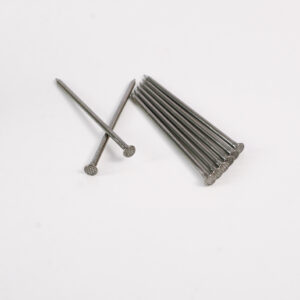
Common nails are general-purpose construction fasteners with a flat head, straight shank and diamond point. They are widely used for framing, carpentry, wooden pallets, packaging and other applications that need dependable holding power. This guide explains common nail sizes, materials, finishes and purchasing details for contractors, distributors and importers.
Building a Distributor Assortment Around Common Nails
Wholesalers rarely make money selling one size of common nail. A practical assortment covers the sizes a market reorders most: 40mm, 50mm and 63mm in bright finish, plus 50mm and 75mm in hot-dip galvanised for exterior work. Add a retail pack option for merchants and a bulk carton for contractors. Once the core assortment is stable, add specialised lines such as ring shank, box and finishing nails. The assortment strategy decides your inventory turns, so review reorder data every quarter and adjust.
Common Nail FAQs: Final Checks
What is the difference between box nails and common nails? Box nails are thinner than common nails of the same length, which reduces splitting in softwood but lowers holding power.
Do I need a test certificate for common nails? For commodity bright nails in bulk, a COA confirming material and dimensions is standard; add a mill test certificate when the order specifies a steel grade or standard.
What Are Common Nails?
A common nail is a heavy-duty wire nail designed for structural and general wood fastening. Compared with finishing nails, common nails have a larger head and thicker shank. The broad head provides a strong bearing surface, while the sturdy shank helps resist bending during installation.
Common nails are available in multiple lengths, wire diameters, head sizes and surface finishes. The correct specification depends on the timber, load, installation method and exposure conditions.
Where Are Common Nails Used?
- Wood framing: joining studs, joists and other timber components where the project specification permits.
- Wooden pallets and crates: assembling transport packaging for industrial and export use.
- General carpentry: fastening boards, battens and rough timber work.
- Fencing and outdoor woodwork: applications that require an appropriate corrosion-resistant finish.
- Temporary construction: formwork, bracing and other jobs where fast installation is important.
Always match the nail to the engineering requirements and local building rules. Nail type, spacing and penetration depth can affect the strength of the finished joint.
How to Choose Common Nail Sizes
Nail length
The nail should pass through the first piece of wood and penetrate the receiving material deeply enough to form a secure connection. If it is too short, holding power may be inadequate. If it is unnecessarily long, the point may protrude or split the timber.
Shank diameter
A thicker shank generally provides greater shear strength but may require more driving force and can increase the risk of splitting near the edge of dry timber. Buyers should specify the exact wire diameter rather than relying only on a local size name.
Head diameter
The flat head helps clamp the wood surface. Head diameter and head finish should be included in drawings or purchase specifications, especially when the nails will be used in automated production or standardized packaging.
Common Nail Materials and Surface Finishes
Bright common nails
Bright nails have no protective zinc coating. They are commonly selected for dry indoor applications, temporary work or projects where the nail will not be exposed to moisture. They are economical, but they are not the best choice for wet or corrosive environments.
Electro-galvanized common nails
Electro-galvanizing produces a thin and relatively smooth zinc layer. It improves appearance and provides limited corrosion protection. Buyers should confirm whether the coating level matches the intended environment.
Hot-dip galvanized common nails
Hot-dip galvanized nails use a heavier zinc coating and are often specified for exterior woodwork and humid conditions. Coating mass, surface texture and applicable test requirements should be agreed before production.
Stainless steel common nails
Stainless steel offers higher corrosion resistance for demanding environments. The correct stainless grade depends on the exposure, timber treatment and project specification. Stainless products usually cost more, so grade verification is important.
Common Nails vs. Box Nails
Common nails normally have a thicker shank than box nails of a similar length. This makes common nails suitable for heavier construction work, while the thinner shank of a box nail can reduce splitting in lighter timber and packaging applications. Buyers should compare actual dimensions because naming conventions vary between markets.
Common Nails vs. Finishing Nails
Common nails have a large visible head and are designed for holding strength. Finishing nails have a much smaller head that can be set below the wood surface for a cleaner appearance. Use common nails for structural or general work and finishing nails for trim, molding and appearance-focused carpentry.
Bulk Common Nail Purchasing Checklist
A complete request for quotation should include: For structural uses, reference ASTM F1667, BS 1202 or EN 14592 on the RFQ so dimensions, head and point geometry are checked against a published standard.
- Nail length and shank diameter
- Head diameter and head type
- Bright, electro-galvanized, hot-dip galvanized or stainless finish
- Required material or standard
- Quantity per box, carton and pallet
- Private label, barcode or printed carton requirements
- Inspection, coating or corrosion-test requirements
- Destination port and delivery schedule
Providing a drawing, reference sample or dimension table helps the manufacturer quote accurately and reduces the risk of differences between samples and mass production.
Quality Checks Before Shipment
Inspectors commonly review length, shank diameter, head shape, point geometry, straightness, surface finish and package weight. Nails should be free from serious bending, malformed heads and excessive surface defects. Packaging should protect the product from moisture and remain strong throughout export handling.
For repeat orders, an approved sample and written specification provide a useful quality baseline. Buyers can also request pre-shipment inspection when the order or destination market requires it.
Frequently Asked Questions About Common Nails
What is the main difference between common nails and other nails?
Common nails use a relatively thick shank and broad flat head for general construction and wood fastening. Other nail types may use smaller heads, thinner shanks or specialized profiles for roofing, finishing or pneumatic installation.
Can common nails be used outdoors?
Yes, when the material and coating suit the exposure. Hot-dip galvanized or stainless steel nails are often considered for outdoor or humid environments, subject to the project specification.
What details are needed for a common nail quotation?
Send the dimensions, surface finish, packing, quantity, destination and any required standards or tests. A photo or sample is helpful when local size terminology may differ.
Common Nail Size Table: Length, Gauge and Typical Uses
Common nails are sold by length and gauge. This table shows the sizes most wholesalers stock:
| Length (mm) | Gauge | Shank (mm) | Typical use |
|---|---|---|---|
| 25mm (1″) | 13-12 | 2.3-2.5 | Light trim, crates |
| 40mm (1-1/2″) | 11 | 2.65 | General carpentry, boxes |
| 50mm (2″) | 11 | 2.65-2.9 | Framing light, pallets |
| 63mm (2-1/2″) | 10 | 3.0-3.25 | Framing, fencing |
| 75mm (3″) | 8-9 | 3.35-3.75 | Structural framing, decking |
| 100mm (4″) | 8 | 3.75-4.0 | Heavy framing, posts |
Use the gauge as a secondary reference: different markets label the same wire gauge differently, so always quote the millimetre shank diameter on the RFQ.
Bright, Galvanised or Coated: Choosing the Finish
The finish decides where the nail can be used:
- Bright: cheapest, for interior and dry work where rust is not a concern.
- Electro-galvanised: a thin protective layer for light exterior and storage protection.
- Hot-dip galvanised: the standard for exterior, roofing and pressure-treated timber.
- Stainless steel: for marine and premium projects where rust stains are unacceptable.
For a full comparison of coating options, see our galvanised nail specification guide. If you are unsure which finish your market needs, order the approved sample first and expose it to the same conditions as the final use – a few months of storage in a damp warehouse tells you more than any brochure.
How Many Common Nails Are in a Kilogram?
Nail counts vary with size and gauge. As a rough planning guide:
- 25mm x 2.3mm: roughly 1,200-1,500 pieces per kilogram.
- 40mm x 2.65mm: roughly 500-650 pieces per kilogram.
- 50mm x 2.65mm: roughly 350-450 pieces per kilogram.
- 75mm x 3.35mm: roughly 180-240 pieces per kilogram.
Counts depend on the exact wire gauge and head design, so ask the supplier for a per-kilogram or per-carton piece count when you need to price per unit.
Packing Options for Wholesale and Retail
- 1kg retail boxes with clear size labels, for builders’ merchants.
- 5kg boxes for job-site convenience.
- 25kg cartons as the standard export unit, palletised for container loading.
- Private label: your brand, your barcode, your pack design.
Set the pack format and marking on the RFQ. A quotation that assumes a different pack size is not comparing like with like.
Common Nails vs Other Nail Families
Common nails are the workhorse, but they are not the right choice for every job. Box nails are thinner for soft wood and reduced splitting. Finishing nails have a small head that is sunk and filled, for trim and joinery. Ring and spiral shank nails grip better in load-bearing and wind-exposed work. When you build a distributor assortment, common nails are the volume line, and the specialised families add margin. Our roofing nail guide explains one of the most important specialised families.
How to Order Common Nails in Bulk
Bulk buying works best with a fixed specification and a written record:
- Write the size in millimetres (50mm x 2.65mm), not just “2 inch common”.
- Fix the finish and the coating standard if galvanised.
- Choose the pack format: 25kg cartons, retail boxes or private label.
- Request the COA and agree the inspection points before production.
- Use the RFQ checklist to compare three suppliers on the same basis.
A written specification turns a commodity purchase into a repeatable process – and it is the same process whether you order one pallet or ten containers.
Quality Checks Before Shipment
For common nails, focus the acceptance check on four points: length and shank diameter against the sample, head shape and burr, point condition, and finish consistency. Sample a small number of cartons per lot and record the results – our nail sampling plan shows how to structure this without over-engineering it.
Common Nail FAQs: More Answers
Are common nails and wire nails the same? In most markets, yes – “wire nails” is the British term for what Americans call common nails.
What is the most popular common nail size? For wholesale, 50mm x 2.65mm and 63mm x 3.0mm cover the widest range of framing and general use.
Can common nails be used for roofing? Not for shingles – use roofing nails with a larger head and ring shank for roof work.
How do I calculate how many cartons fit in a container? Divide the pallet weight into the container payload (about 25,000-28,000kg for a 20′ container), then round down for packing density.
Common Nail FAQs: One More Answer
What does “common nails, bright finish” mean? It means uncoated carbon steel nails for interior and dry work, usually priced per kilogram or per 1,000 pieces.
Source Common Nails from Kin Metal
Kin Metal supplies nails and fasteners for distributors, construction suppliers and project buyers. View our common nails product page, explore the full product range, or send your specification for a quotation.