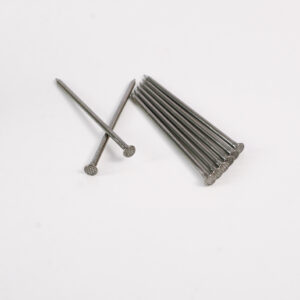
For a construction distributor or project buyer, a nail order is reliable only when the specification is clear enough for both sides to check before production and again before shipment. “Galvanized nails” is a useful starting point, but it is not a complete buying instruction. Different applications expose fasteners to different moisture, timber, handling and installation conditions. A practical specification helps buyers compare offers fairly, reduces avoidable substitutions and gives the receiving team a sensible inspection checklist.
Coating Standards on Certificates: What to Check
When a quotation mentions a coating certificate, check three details before accepting it. First, the standard name: EN 10244-2 for zinc coatings on steel wire products is the reference most European buyers use. Second, the coating weight or class: a class number without a minimum value is incomplete. Third, the date and batch reference: a certificate should identify the exact lot it covers. A COA that names the standard, the weight and the batch makes the coating requirement testable and traceable from factory to container. For zinc certificates, the European reference is EN 10244-2 and the US reference is ASTM A641; ask for the coating class and weight in g/m² on the document.
Galvanised Nail FAQs: Final Checks
Should I ask for a pre-shipment inspection of galvanised nails? Yes, especially for a first order. A simple pre-shipment check of coating appearance, dimensions and packing prevents the most common galvanising complaints.
Electro vs Hot-Dip Galvanised: The 10-Minute Guide
Most galvanised nail questions come down to one choice: electro or hot-dip. The difference is real and measurable:
| Characteristic | Electro-galvanised (EG) | Hot-dip galvanised (HDG) |
|---|---|---|
| Coating thickness | Thin (5-15 micrometres) | Thick (40-80+ micrometres) |
| Appearance | Bright, smooth | Dull grey, textured |
| Corrosion life outdoors | Short | Long |
| Typical use | Interior, dry, coated products | Exterior, roofing, fencing |
| Cost | Lower | Higher |
If the nail will be exposed to weather, condensation or treated timber, specify hot-dip galvanised and state the coating standard (EN 10244-2) with a minimum coating weight.
What Coating Weight (g/m2) Actually Means
Coating weight is the mass of zinc per square metre of surface. A higher number means more zinc and a longer corrosion life. For nails, common specified values range from about 40-50 g/m2 for light exterior duty to 100+ g/m2 for marine exposure. When a spec sheet says only “galvanised”, the supplier can interpret it as the cheapest electro finish. When it says “hot-dip galvanised, min 50 g/m2 to EN 10244-2”, the requirement is unambiguous and testable.
Galvanised Nail Specification Lines You Can Copy
Use these lines in your next enquiry:
- Product: hot-dip galvanised common nails
- Size: 75mm x 3.75mm (8 gauge)
- Coating: HDG, min 50 g/m2, EN 10244-2
- Head: 8mm round
- Point: diamond
- Packing: 25kg carton, cartons palletised and wrapped
- Documents: COA and mill test certificate
Seven lines. No ambiguity. The supplier can price it without a single clarifying call.
Inspection Checks Buyers Can Do Without a Lab
You do not need a laboratory to catch the most common galvanising problems:
- Check the colour: bright silver suggests electro; dull grey suggests hot-dip.
- Scratch a nail in an inconspicuous spot: a thick zinc layer does not flake off in sheets.
- Look for bare or rusting spots on the head and point – weak points of many coatings.
- Weigh a known quantity and compare with the specification (grams per piece).
- Confirm the coating standard and weight on the COA before accepting the lot.
Galvanised Nails vs Other Corrosion Protection
Galvanising is not the only protection for nails. Stainless steel (A2/304, A4/316) outperforms zinc in marine and acidic environments but costs several times more. Phosphate and oil coatings protect against light surface rust in storage but add almost no outdoor life. For most construction orders, hot-dip galvanised is the best balance of cost and corrosion performance; for coastal and premium projects, stainless is the safer call. Our roofing nail selection guide covers the same trade-offs for roof applications.
Packing and Marking for Galvanised Nails
Galvanised nails are sold through hardware retail, builders’ merchants and project supply, and each channel expects a different pack:
- Retail: 1kg and 5kg printed boxes with the size and coating stated on the label.
- Trade: 25kg cartons with batch numbers for traceability.
- Private label: your packaging, your barcode, your coating claim – make sure the claim matches the COA.
State the pack format, label content and barcode requirements on the RFQ so the delivered goods match your sales channel. For the full buying workflow, pair this guide with our nail RFQ checklist.
Buying Galvanised Nails: Checklist Recap
- Name the application and the exposure (interior, exterior, coastal).
- Fix the coating type and minimum weight to a standard.
- Set the dimensions: length, shank, head, point.
- Choose the pack format and marking.
- Request the COA and any third-party inspection with the quotation.
A buyer who follows these five steps gets comparable quotes and a defensible record. Start with the common nails buying guide if you are also selecting sizes and materials.
Galvanised Nail FAQs: More Answers
Is “galvanized” the same as “galvanised”? Yes – one spelling is American, the other British. Use “galvanised” for UK and Irish buyers, “galvanized” for the US market.
How can I tell electro from hot-dip in the box? Colour and texture: electro is bright and smooth, hot-dip is dull grey with a rougher surface. When in doubt, check the COA.
Do galvanised nails rust? All zinc coatings eventually corrode in wet conditions. The question is how long – which is exactly what the coating weight and standard tell you.
Start with the application, not the catalogue name
Ask what the nail will fasten, where it will be used and how it will be driven. Roofing work, timber framing, pallets, fencing and general construction can each call for a different balance of holding power, head coverage, corrosion resistance and finish. The same diameter may not perform the same way when the shank pattern or point style changes.
For example, roofing nails are commonly selected around the roof covering and substrate, while common nails are a more general construction option. When the application is uncertain, share a drawing, sample, installation method or the dimensions of the materials being joined. This turns a vague product request into a technical conversation.
Build the specification around measurable features
A purchase order should state each critical feature in a format that can be checked. At a minimum, record length, wire diameter, head, shank, point, base material, finish, quantity and packing. Do not rely on a generic size label alone.
Length and wire diameter
State nail length and shank diameter in the units used by your market. Length must suit the material thickness and the required penetration; diameter affects bending resistance and the size of the hole in the workpiece. If a tolerance matters to installation or incoming inspection, identify it in the order or agreed product drawing.
Head, shank and point
Describe the head type and diameter where holding area or appearance matters. Specify whether the shank is smooth, ring, screw or another pattern; shank geometry can affect withdrawal resistance and driving behaviour. Also identify the point style if it is relevant to the substrate. A useful description leaves no doubt about the feature a buyer expects to receive.
Material and galvanizing
Confirm the base material and corrosion-protection method required for the intended environment. “Galvanized” can cover different processes and does not by itself define coating weight, appearance or service suitability. State the finish requested and any buyer-approved acceptance standard. For exterior or moisture-prone applications, discuss the site conditions early rather than assuming one coating fits every project.
Packaging and marking
Packaging is part of the specification, not an afterthought. Record the net weight or piece count per inner box, carton configuration, pallet requirements and labels needed for warehouse receiving. If several sizes are ordered, clear carton markings and batch identification make later stock control easier.
Use an approval sample before a repeat order
A pre-production or reference sample gives both parties one physical benchmark. Buyers can check dimensions, head shape, finish, packaging and label language before committing to a larger shipment. Keep the approved sample, drawing revision and final packing instruction together with the order record. This is especially useful for a private-label programme or a buyer with a defined incoming-inspection process.
Set up quality checks that match the risk
Quality control works best when it is connected to the features that could disrupt use or receiving. A buyer may request checks of dimensions, visible coating condition, head and point formation, shank pattern, packaging weight and carton labels. The right checks depend on the application and agreed specification; they should not be copied blindly from an unrelated product.
Agree how inspection results will be reported, who reviews a non-conformance and what reference documents govern acceptance. Avoid asking a supplier to guarantee performance claims that have not been defined or verified. Clear, proportionate requirements make it easier to identify an issue before loading instead of after delivery.
Compare quotations on the same basis
When requesting quotations, send the same technical and packing information to every potential supplier. Otherwise, two prices may describe different nails, coatings or carton formats. Ask each quotation to state the product description, unit of measure, packing basis, lead-time assumptions and any item that remains to be confirmed. This makes comparison more useful than judging a unit price alone.
If you are building a multi-item order, organize the request in a simple table with item code, application, dimensions, finish, shank, quantity and packing. Include photos or a drawing when they remove ambiguity. You can review Kin Metal’s nail and wire product range as a starting point, then provide the details that are specific to your market.
Questions to resolve before placing the order
- What substrate and exposure conditions will the nail face?
- Which dimensions, head style and shank pattern are essential?
- What finish is required, and what appearance is acceptable?
- How should cartons be packed, labelled and palletized?
- Which sample, drawing or agreed checklist will be used for acceptance?
FAQ
Is “galvanized nail” enough information for a purchase order?
Usually not. Add dimensions, head and shank style, material/finish requirements, application, quantity and packing details so the order can be quoted and checked consistently.
Should buyers choose the longest nail available?
No. Select length according to the materials being joined and the required penetration. Excess length can create handling or appearance issues, while too little engagement may reduce holding performance.
Why should packaging be specified?
Packaging affects safe handling, counting, warehouse storage and private-label presentation. Defining it before production prevents misunderstandings at dispatch.
Galvanised Nail FAQs: One More Answer
What coating weight should I specify for coastal work? For coastal exposure, specify hot-dip galvanised with a minimum coating weight of 80-100 g/m2 to EN 10244-2, or use stainless steel for premium projects.
Turn requirements into an actionable enquiry
A concise, complete specification is one of the most effective tools a B2B buyer has. It lets suppliers respond accurately and helps your team evaluate the delivered goods against the original requirement. If you are sourcing galvanized nails or another construction fastener, contact Kin Metal with your application, sizes, finish, quantity and packaging requirements for a focused quotation discussion.