Stainless Steel Nails vs Galvanised Nails: Which One Do You Need?
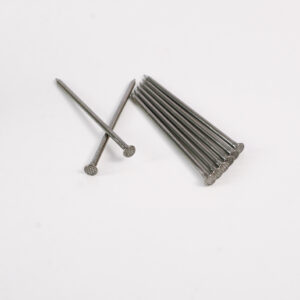
Stainless steel nails are the premium choice for projects where rust stains and corrosion failure are unacceptable – coastal construction, marine joinery, exterior cladding, treated timber and food-adjacent environments. They cost more than galvanised nails, but they last decades longer in corrosive conditions. This guide explains the grades, sizes, applications and buying details that importers and distributors need before placing an order.
If you are comparing coatings for the first time, our galvanised nail specification guide covers the zinc alternative, and this article explains when stainless steel is worth the premium.
Where Stainless Steel Nails Are Used
Stainless nails appear in projects where a failed fastener is expensive to replace or where rust staining ruins the finish:
- Coastal and marine construction: boardwalks, jetties, boat building, sea walls and any structure within a few kilometres of salt water.
- Exterior cladding and siding: cedar, composite and metal cladding where bleed stains on the facade are unacceptable.
- Treated timber structures: decks, fences and playgrounds where copper-based preservatives attack ordinary galvanised nails.
- Food processing and brewing: washdown environments where any rust contamination is a hygiene issue.
- Swimming pools and water features: chlorides attack most fasteners; 316 stainless is the standard answer.
- High-end joinery and furniture: where visible nails must not stain the wood over years of humidity cycles.
304 vs 316 Stainless Steel: What the Grades Mean
Stainless steel nails are almost always made from one of two grades:
- 304 (A2) stainless steel: the standard grade for nails. It resists atmospheric corrosion, moisture and most chemicals well, and it is the default choice for exterior joinery, fencing, cladding and treated timber.
- 316 (A4) stainless steel: a higher grade with added molybdenum, which improves resistance to chlorides and salt. It is specified for coastal areas, boats, swimming pools and industrial environments where 304 would pit or rust.
For a distributor, stocking 304 as the standard line and 316 for coastal and marine buyers covers almost all demand. The two grades look similar, so the grade must be marked on the carton and the quotation.
| Grade | Common name | Best for | Typical price level |
|---|---|---|---|
| 304 | A2 | Exterior joinery, cladding, fencing, treated timber | Base stainless price |
| 316 | A4 | Coastal, marine, pools, industrial | 15-30% above 304 |
Common Sizes of Stainless Steel Nails
Stainless nails are specified in millimetres in most export markets and in inches in the US. These are the sizes buyers order most:
- 25mm (1″) and 32mm (1-1/4″) – cladding, battens and light exterior work.
- 40mm (1-1/2″) and 50mm (2″) – fencing, decking and general exterior joinery.
- 63mm (2-1/2″) and 75mm (3″) – framing, posts and structural outdoor work.
- 50mm and 75mm in 304 or 316 – the two most popular wholesale sizes.
Shank diameters follow the same gauge logic as other nails: 2.65mm (11 gauge), 3.35mm (9 gauge) and 3.75mm (8 gauge) cover most applications. Always confirm the length, gauge and grade on the RFQ – “stainless steel nails” alone does not tell the factory which grade to produce.
What Is the Best Stainless Steel Nail for Treated Timber?
Pressure-treated timber contains copper and other preservatives that corrode ordinary galvanised nails. Stainless steel, particularly 316, is the most durable fastener for treated lumber, and it is often required by warranty conditions. A2/304 performs well in most treated timber, but A4/316 is recommended in high-moisture and coastal installations. If you are unsure, specify 316 and state the grade on the purchase order.
Stainless Steel Nails vs Galvanised Nails: Key Differences
The choice between stainless and galvanised is a trade-off between cost and corrosion life:
| Factor | Galvanised (HDG) | Stainless steel |
|---|---|---|
| Corrosion life outdoors | Good for many years | Decades, near-permanent |
| Rust staining | Possible over time | None |
| Coastal / marine | Marginal | Recommended (316) |
| Cost per piece | Lower | Higher |
| Strength | Good | Good, higher corrosion resistance |
For interior and dry applications, galvanised nails are the economical choice. For exterior exposure, coastal areas, treated timber and projects where staining cannot be repaired, stainless steel pays for itself.
Do Stainless Steel Nails Rust?
Stainless steel resists corrosion but it is not rust-proof in every environment. Two problems cause most failures:
- Surface contamination: carbon steel dust or grinding debris can embed in the surface and rust, staining the surrounding material. Store stainless nails away from carbon steel and keep them dry.
- Wrong grade: 304 in heavy salt exposure can pit. That is why 316 is specified for marine and coastal work.
A genuine 304 or 316 nail will not bleed rust stains like a galvanised nail after its zinc layer fails. If you see orange staining, check the grade certificate before blaming the material.
Buying Stainless Steel Nails from China: Quality Checks
Because stainless nails cost more per kilo than carbon steel, grade substitution is the main risk in sourcing. Protect your order with these checks:
- Grade certificate (COA): request the material certificate showing 304 or 316 chemistry for the batch.
- Magnet test as a first filter: genuine austenitic stainless is only weakly magnetic, while carbon steel and some substituted grades are strongly magnetic.
- PMI or mill test certificate: for large orders, specify that the supplier provides the mill certificate for the wire rod used.
- Salt spray test: for coastal or marine contracts, ask for a documented salt spray result rather than a verbal guarantee.
- Carton marking: every carton should state the grade, size, finish and batch number for traceability.
For more on reading the paperwork, our COA and mill test certificate guide explains the key fields to check.
Packing and Certification for Stainless Steel Nails
Because stainless nails cost more, buyers expect clear documentation:
- Carton label stating grade (304/A2 or 316/A4), size and finish.
- COA confirming the material grade for the batch.
- Mill test certificate where the project or warranty requires it.
- Packing: 1kg and 5kg retail boxes, or 25kg export cartons with palletising.
State the required documents on the RFQ so the quotation includes them. For the full enquiry structure, use our nail RFQ checklist. For grade and dimensional checks, reference ASTM F1667 for driven fasteners and EN 14592 for timber connections so the mill test certificate can be checked against a named standard.
Stainless Steel Nail FAQs
Are 304 and 316 stainless steel nails the same price? No – 316 usually costs 15-30% more per piece because of the molybdenum content.
Can stainless steel nails be used with aluminium? Avoid direct contact between stainless steel and aluminium in wet conditions to prevent galvanic corrosion; use appropriate isolation where the two metals meet.
What is the best stainless steel nail for a boat? 316 (A4) is the standard choice for marine environments because of its superior salt resistance.
Do stainless steel nails come in collated strips? Yes – collated stainless nails are available for coil and strip nailers, with the same grade and size specifications as loose nails.
How long do stainless steel nails last? In most exterior environments 304 lasts decades; 316 is effectively permanent in coastal and marine exposure.
Can I use stainless steel nails with a nail gun? Yes, but the stainless alloy is harder to drive, so confirm the collation and gauge match the tool before ordering.
Where to Source Stainless Steel Nails in Bulk
Kin Metal manufactures stainless steel nails in 304 and 316 grades, in sizes from 25mm to 75mm, with bright, polished or custom finishes and export packing. Every quotation states the grade, size, packing and certification. View our stainless steel nail product page or send your specification for a quotation.