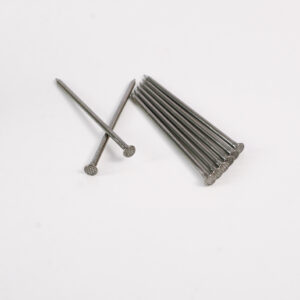
Choosing the right roofing nails is essential for a secure, weather-resistant roof. Nail length, shank design, head size, material and coating all affect holding power and service life. This guide explains the main options so contractors, distributors and importers can specify roofing nails with greater confidence.
Choosing Between Collated and Loose Roofing Nails
Collated coils speed up production roofing and reduce operator fatigue, which is why crews prefer them on large jobs. Loose nails remain popular for repairs, small roofs and markets where coil nailers are rare. The two formats also pack differently: coils need trays and take more space per nail, while loose nails pack densely in cartons. Many distributors stock both – coils for the production channel and loose packs for merchants – and adjust the mix to their market’s labour habits.
Roofing Nail FAQs: Final Checks
How many roofing nails do I need per square of shingles? Allow roughly 320-400 nails per square (100 square feet) including starter rows and waste; exact counts depend on the shingle pattern and wind requirements.
What Are Roofing Nails?
Roofing nails are fasteners designed to attach asphalt shingles, roofing felt, insulation board and related materials to a roof deck. They normally have a wide, flat head that spreads pressure across the roofing material and helps prevent pull-through. Depending on the application, they may use a smooth, ring or screw shank.
Reliable performance starts with matching the nail to the roofing material, deck thickness, local climate and installation method. A product that works well in a dry inland environment may not be suitable for a coastal project with high corrosion exposure.
How to Choose the Correct Roofing Nail Size
Nail length
The nail must penetrate the roof deck deeply enough to provide secure holding power. The correct length depends on the thickness of the shingle or roofing layer and the deck material. Always follow the roofing-system supplier’s installation instructions and applicable local building requirements.
When comparing quotations, specify the required nail length clearly and confirm whether the stated dimension includes the head. For mixed orders, list each size and quantity separately to reduce packing and delivery errors.
Shank diameter
A larger shank diameter can increase withdrawal resistance, but it also requires more driving force. Pneumatic tools have specific collation and diameter limits, so buyers should confirm tool compatibility before placing a bulk order.
Head diameter
The wide head is one of the most important features of a roofing nail. It helps secure thin roofing materials without tearing them. Buyers should specify the head diameter and whether a flat, checkered or other head finish is required.
Smooth, Ring or Screw Shank?
- Smooth shank roofing nails: economical and easy to drive. They are commonly used where standard holding power is sufficient.
- Ring shank roofing nails: the annular rings improve grip in wood and can provide stronger withdrawal resistance.
- Screw shank roofing nails: the twisted profile improves holding power in suitable substrates and can be useful where movement or wind uplift is a concern.
The best choice depends on the roof deck and project specification. If you are supplying several markets, ask customers which shank style is standard for their installers.
Material and Coating Options
Electro-galvanized
Electro-galvanized nails have a thin, uniform zinc layer and a clean appearance. They are often selected for cost-sensitive applications with limited moisture exposure. The required corrosion resistance should be confirmed before use in demanding outdoor conditions.
Hot-dip galvanized
Hot-dip galvanized roofing nails have a heavier zinc coating and are widely chosen for exterior roofing applications. Coating weight and finish can vary, so importers should state the required standard or test method in the purchase specification.
Stainless steel
Stainless steel nails are used for projects requiring higher corrosion resistance, including some coastal or chemically exposed environments. The stainless grade must suit the application; price should not be the only selection factor.
Collated or Bulk Roofing Nails?
Bulk nails are suitable for manual installation and flexible packaging requirements. Collated roofing nails are designed for compatible pneumatic nailers and can increase installation speed on larger projects. For collated products, confirm the coil angle, wire or plastic collation, quantity per coil, shank diameter and compatible tool model.
Roofing Nail Purchasing Checklist
Before requesting a quotation, prepare the following information:
- Application and roofing material
- Nail length, shank diameter and head diameter
- Smooth, ring or screw shank
- Material and coating requirement
- Bulk or collated packing
- Quantity per box, carton and pallet
- Required testing, inspection or documentation
- Destination port and expected delivery schedule
A complete specification makes quotations easier to compare and helps prevent differences between samples and production orders.
Quality Checks for Roofing Nails
Professional buyers should check dimensions, head formation, point consistency, shank shape, surface finish and packaging. For coated nails, request the relevant corrosion-resistance or coating information when it is required by the project. Samples should be tested with the actual roofing material and installation tools before approving mass production.
Packaging also matters. Clear labels, moisture protection and strong export cartons reduce handling problems and help distributors manage inventory efficiently.
Why Work With an Experienced Nail Manufacturer?
An experienced manufacturer can help buyers match dimensions, coatings and packing to their market. Kin Metal supplies nails and fasteners for distributors, construction suppliers and project buyers. Explore our nail and fastener products, learn more about Kin Metal, or send your specification through our quotation form.
Frequently Asked Questions
What type of roofing nail has the strongest grip?
Ring and screw shanks generally provide greater withdrawal resistance than smooth shanks, but performance depends on the deck material, dimensions and installation. Follow the roofing-system specification for the final choice.
Are galvanized roofing nails suitable for outdoor use?
Galvanized nails are widely used outdoors, but coating type and thickness matter. Hot-dip galvanized or stainless steel may be preferred where higher corrosion resistance is required.
What information is needed for a roofing nail quotation?
Provide the nail dimensions, shank style, material or coating, packing method, order quantity, destination and any applicable testing requirements. Photos, drawings or an approved sample can make the specification even clearer.
Roofing Nail Length and Shank Quick Reference
Roofing nails are specified by length, shank diameter and head. This table covers the common ranges for asphalt shingle and underlayment work:
| Application | Length | Shank diameter | Head style |
|---|---|---|---|
| Shingle base layer | 25-32mm | 2.5-3.0mm | Large flat |
| Standard shingles | 32-38mm | 2.8-3.1mm | Large flat |
| Roof underlayment / felt | 19-32mm | 2.5-3.0mm | Cap or flat |
| High-wind regions | 38-50mm | 3.0-3.5mm | Ring shank, cap |
In high-wind or coastal areas, longer ring-shank nails with a larger head hold better. Check local building code requirements before specifying a container quantity.
Ring, Smooth or Screw Shank: When Each Wins
- Smooth shank: cheapest, fastest to drive, and fine for low-exposure shingles. Holding power comes mainly from friction.
- Ring shank: the ridges grip the decking and resist pull-out from wind uplift. The standard choice for high-wind and steep roofs.
- Screw (threaded) shank: maximum withdrawal resistance, usually in collated form. Best for engineered lumber and metal-adjacent applications, and more expensive per piece.
For a distributor, stocking ring-shank as the default and smooth as the economy line covers most demand without doubling the SKU list.
Coastal and Marine Roofing: Which Finish to Specify
Salt air attacks ordinary coatings quickly. For roofs within a few kilometres of the coast:
- Use hot-dip galvanised nails with a zinc coating meeting EN 10244-2 and a stated minimum coating weight.
- For premium or marine-grade projects, specify stainless steel (A2/304 or A4/316) – especially where the nail is exposed rather than hidden under the shingle.
- Avoid electro-galvanised nails for coastal exposure; the thin coating fails fastest in salt spray.
Your galvanised nail specification guide explains the coating differences in more detail.
How to Read a Roofing Nail Specification
A complete roofing nail specification looks like this: “ring-shank roofing nail, 38mm length, 3.1mm shank, 11mm head, hot-dip galvanised, EN 10244-2 HDG coating”. Every element matters: length for penetration, shank for pull-out resistance, head for load spread, and the coating standard for corrosion life. When you receive a quotation, check that each element is stated rather than implied – a specification that is silent on the coating is a price that is waiting to surprise you. For UK and European roof projects, BS 5534 and EN 14592 are the standards roofers and engineers reference; including them on the spec sheet makes your quotation traceable to published rules.
Roofing Nail Buying Mistakes to Avoid
- Buying by length only – the shank diameter and head size decide holding power.
- Using smooth-shank nails in high-wind regions where the code expects ring shank.
- Specifying “galvanised” without the coating method or minimum weight.
- Ordering bulk nails when the market needs retail packs, or the reverse.
- Skipping the approved sample before a first container order.
Roofing Nails vs Clout Nails
Roofing nails and clout nails are sometimes confused. Roofing nails are longer, often ring-shanked, and used for shingles and underlayment; clout nails are short with a wide flat head, used for felt, battens and fence boards. The two are not interchangeable, and quoting the wrong one is one of the most common specification errors in the fastener trade.
Roofing Nail Packaging for Wholesale and Retail
Roofing nails are sold in several formats, and the right one depends on your channel:
- Retail boxes: 1kg and 5kg boxes with clear size labels, for builders’ merchants and hardware retail.
- Bulk cartons: 25kg cartons for contractors and project buyers.
- Collated coils: 120-300 nails per coil, packed in coil trays, for roofing crews with coil nailers.
- Private label: your brand on the box, the coil label or the carton, with barcodes if required.
State the pack format and marking requirements on the RFQ so the quotation matches the way you sell.
Quality Checks Before Shipment
Before a container of roofing nails leaves the factory, verify the key acceptance points: length and shank diameter against the approved sample, coating appearance and consistency, head shape and edge, and collation integrity for coil nails. Agree these checks in advance – our nail sampling plan guide shows how to structure them.
Roofing Nail FAQs: More Answers
How long should roofing nails be? For standard asphalt shingles, 32-38mm is typical; use longer nails in high-wind areas and thicker decks.
Do roofing nails come collated? Yes – coil roofing nails (15°-16°) are standard for production roofing crews using coil nailers.
What is a cap nail? A roofing nail with a wide plastic or metal cap that spreads the load over underlayment – common for felt and house wrap.
Can I use ring-shank nails for fence boards? Yes – ring shanks work well in soft timber and weather-exposed boards, though clout nails are the traditional fence board choice in the UK market.
Roofing Nail FAQs: One More Answer
What is the best roofing nail for high-wind areas? Ring-shank nails 38-50mm long with a large head are the common specification; check the local building code for the exact requirement before ordering.
Request a Roofing Nail Quote
Need roofing nails for distribution or a construction project? Send Kin Metal your sizes, coating, packing and quantity requirements. Our team will review the specification and prepare a suitable quotation.
Review the available specifications on the Kin Metal roofing nails product page, or send your sizes, finish, packing and quantity for a quotation.